

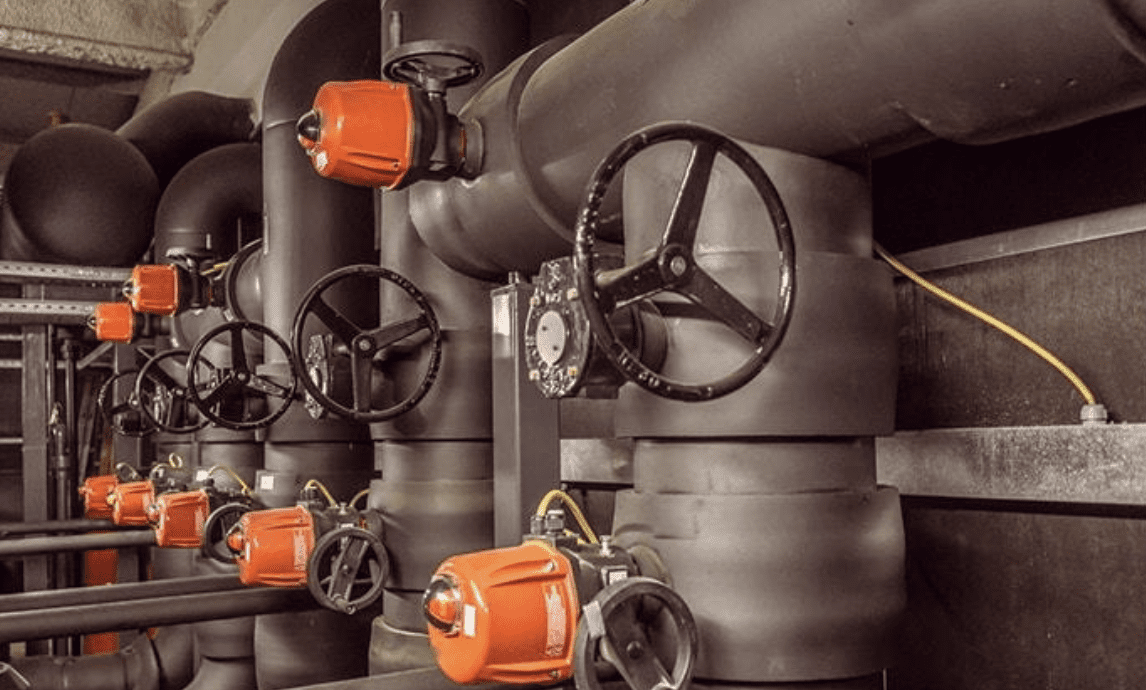
In-line silencer
In industrial environments, noise control is crucial to guarantee operator safety, preserve equipment integrity and meet regulatory requirements. The dissipative in-line silencer is a high-performance acoustic solution for effectively reducing noise generated by air networks, blowers, compressors or heat engines. Based on the principle ofacoustic absorption, this device incorporates absorbent materials that transform sound energy into heat by friction, without significantly impacting flow rates. Designed to adapt to demanding environments (energy, data centers, nuclear, heavy industry), it guarantees sound attenuation of up to 50 dB(A). The BOËT Group, experts in noise treatment and industrial acoustic equipment, offer a range of custom-made acoustic silencers that are robust, durable and compatible with the mechanical and thermal constraints of modern installations. A reliable solution for all industrial noise reduction needs.
Effective noise reduction for industrial environments
The dissipative in-line silencer is a high-performance acoustic solution for effectively reducing noise generated by air networks, blowers, compressors or heat engines. Based on the principle ofacoustic absorption, this device incorporates absorbent materials that transform sound energy into heat by friction, without significantly impacting flow rates. Designed to adapt to demanding environments (energy, data centers, nuclear, heavy industry), it guarantees sound attenuation of up to 50 dB(A). The BOËT Group, experts in noise treatment and industrial acoustic equipment, offer a range of custom-made acoustic silencers that are robust, durable and compatible with the mechanical and thermal constraints of modern installations. A reliable solution for all industrial noise reduction needs.
Applications
This industrial silencer is designed for use in the :
A clear promise: efficiency, reliability and acoustic expertise
The BOËT Group, a recognized expert in industrial acoustic solutions, designs customized, field-proven noise reduction systems. Its range of acoustic silencers is based on over 50 years ofindustrial acoustic studies, advanced technical design and continuous innovation.
Product description : What is a dissipative in-line silencer?
The dissipative in-line silencer, also known as :