

Introduction
Given these high standards, the engineering design phase is critical. Incorrect sizing or noncompliance with the applicable standards cannot be detected during the design phase—it only becomes apparent upon project acceptance or, worse, during commissioning.
The Silencer Plan: The First Link in the Compliance Chain
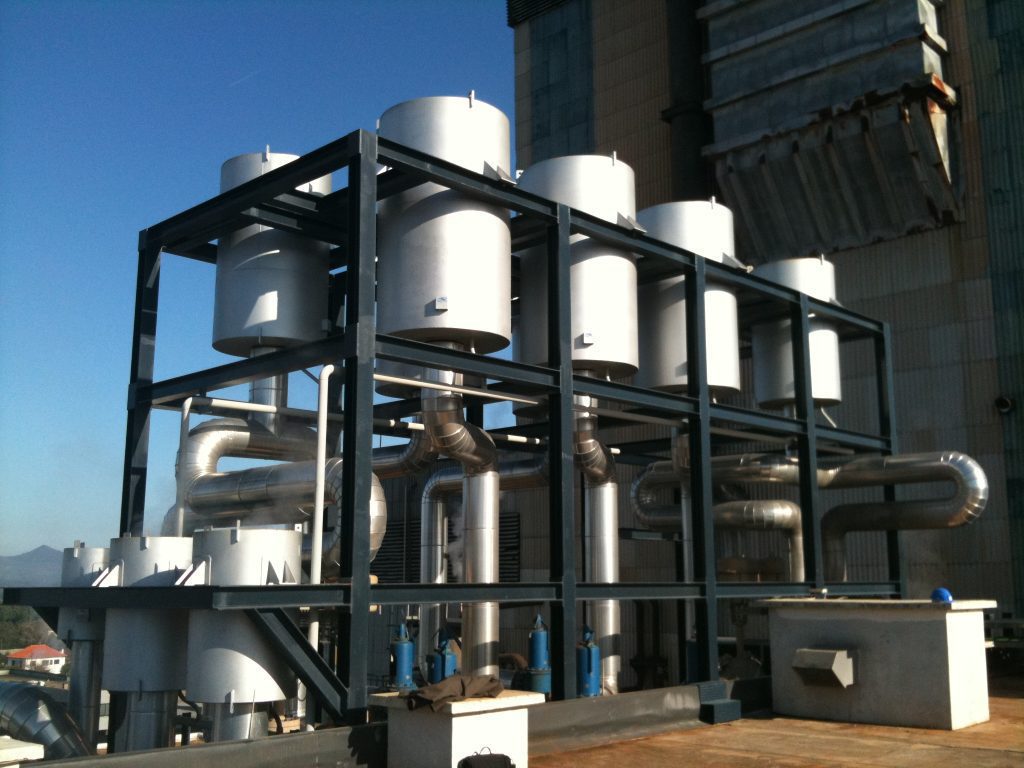
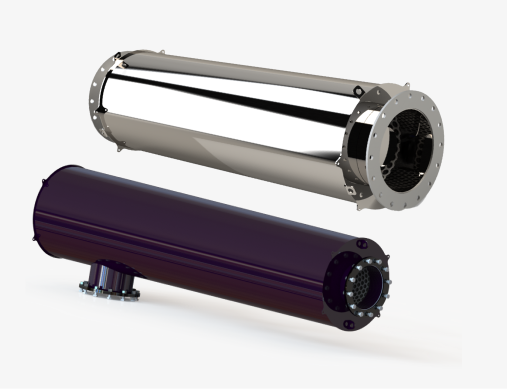
Designing an acoustic silencer for the exhaust system of a turbine, boiler, compressor, or emergency generator involves a chain of responsibility that begins in the design office. Every drawing produced at this stage represents a commitment: to the expected acoustic performance, to the mechanical integrity of the equipment under operating conditions, and to compliance with contractual construction codes.
The applicable codes vary by industry and customer: ASME B16.5, RCC-M for the nuclear industry, CODAP and CODETI for pressure vessels, and EN 15085 for welded railway structures. Each standard imposes specific requirements on materials, assemblies, tolerances, and associated inspections. A design that does not take these constraints into account from the outset leads to nonconformities that surface during production, quality control, or acceptance testing—each time resulting in additional costs and delays.
From Specification Analysis to Design Selection
Upon receipt of a project kickoff order, the Design Engineer analyzes all of the project’s technical specifications. They identify the acoustic requirements (attenuation level, target frequency spectrum, acceptance test conditions) and the dimensional constraints imposed by the installation environment: available space, connections, and allowable loads on the supports. They also identify the applicable building code, which determines the choice of materials, assembly geometries, and the documentation to be produced.
Based on this, he determines whether a solution from the Groupe Boët’s standard product lines can be adapted to the project, or whether the project requires a complete redesign. This decision affects the workload of the Design Office and the manufacturing schedule. It is based on a detailed understanding of the existing equipment, its performance capabilities, and its structural limitations—knowledge that is gained through experience.
SolidWorks
Design work is carried out in SolidWorks, with particular attention paid to consistency between the 3D model, manufacturing drawings, and associated technical documentation. Every customer-requested modification and every change to specifications made during the design phase must be incorporated, tracked, and validated before the drawing is sent to the shop floor. Document traceability is a requirement of the ISO 9001 and ISO 19443 certifications under which the Groupe Boët’s Design Office operates.
Why Hands-On Experience Makes a Difference in the Engineering Department
What makes the position of Design Engineer challenging is the need to design for two stakeholders at the same time, each with different constraints.
On the client side, change requests can be made up until the final approval of the plans. Each request must be analyzed, incorporated if it is compatible with the applicable code, or resolved if it conflicts with the project’s technical constraints. On the shop floor, manufacturing constraints must be anticipated as early as the design phase.
The geometry of a compressor silencer or booster silencer that appears correct on paper may prove difficult to assemble using the required welding sequences, or may be inaccessible for the non-destructive testing mandated by the code. These difficulties are not discovered during production; they are addressed during the design phase, provided the design engineer has sufficient knowledge of the realities of the shop floor.
Jean-Pierre Franquet, a Design Engineer at the Groupe Boët’s Design Office for the past sixteen years, developed his expertise in metal fabrication before joining the group, eventually rising to the position of workshop team leader. This hands-on experience shapes the way he reads a drawing: he thinks in terms of assembly sequences, anticipates welding challenges on complex geometries, and identifies—right from the design stage—any issues that might require back-and-forth communication between the Design Office and the shop floor.
This type of professional, trained in both 3D design and actual manufacturing, is rare. Yet it is particularly valuable in an engineering firm that designs acoustic equipment for environments where there is zero margin for error: nuclear power plants, energy production sites, and petrochemical facilities.
The Groupe Boët’s Engineering Department: A Certified Framework, Full Responsibility
The Groupe Boët’s Engineering Department produces design drawings for all industrial acoustic equipment manufactured in-house: engine mufflers, compressor mufflers, ventilation mufflers, acoustic enclosures, and custom acoustic protection components. Each drawing ensures the traceability and compliance of the delivered equipment, within a framework certified to ISO 9001 and ISO 19443.
This rigorous design approach is one of the cornerstones of the Groupe Boët’s commitment to the performance of its acoustic equipment, from the design phase through to on-site acceptance testing. For any requests regarding industrial acoustic studies or the design of silencers in accordance with building codes, the Groupe Boët can be contacted at www.groupe-boet.com. Engineers and technicians specializing in mechanical design are also welcome to submit their applications through this channel.